In this article (9)
- 1. The one thing to understand first: Madeira has no bad season, but it does have wrong-fit seasons
- 2. If your top priority is hiking (PR1, Pico Ruivo, levadas): late April to mid-June, or mid-September to October
- 3. If you want empty levadas and low prices: January to early March
- 4. If you're coming for whales, dolphins, and marine life: April to October
- 5. If you want the beach + swim experience: July to October
- 6. If you're cruising and only have one port day: May-October beats winter
- 7. If you love food festivals & culture: February (Carnival), April (Flower Festival), September (Wine Festival), December (Christmas lights & Madeira NYE fireworks)
- 8. Months to think twice about (and why)
- 9. How to hedge your bets: pick shoulder season and stay 7+ nights
Madeira is a year-round destination — that's genuinely true, not tourism copy. But the trip you'll have in February is not the trip you'll have in September. If you're picking dates and Google keeps giving you generic 'April to October' answers, this guide takes a different angle: it asks what you actually want to do on the island, then tells you which season fits.
It's the framework I use when friends ask me 'when should we come?' — because the honest answer depends less on the calendar and more on whether you're chasing sunrise ridge hikes, uncrowded levadas, whale sightings, or just a warm swim before dinner.
The one thing to understand first: Madeira has no bad season, but it does have wrong-fit seasons
Coastal temperatures move between roughly 16 °C in January and 26 °C in August. Sea temperatures follow with a delay — coldest in March (17 °C), warmest in September (23 °C). It never freezes at sea level, it never gets uncomfortably hot. That's the flat part of the answer.
What actually changes across the year is: how busy the trails are, whether the mountain peaks are open, how likely your cruise-day tour gets cancelled by swell, how full Funchal hotels are, and what's in season on restaurant menus. Get those right and any month works. Get them wrong and October can feel disappointing while February feels magical.
If your top priority is hiking (PR1, Pico Ruivo, levadas): late April to mid-June, or mid-September to October
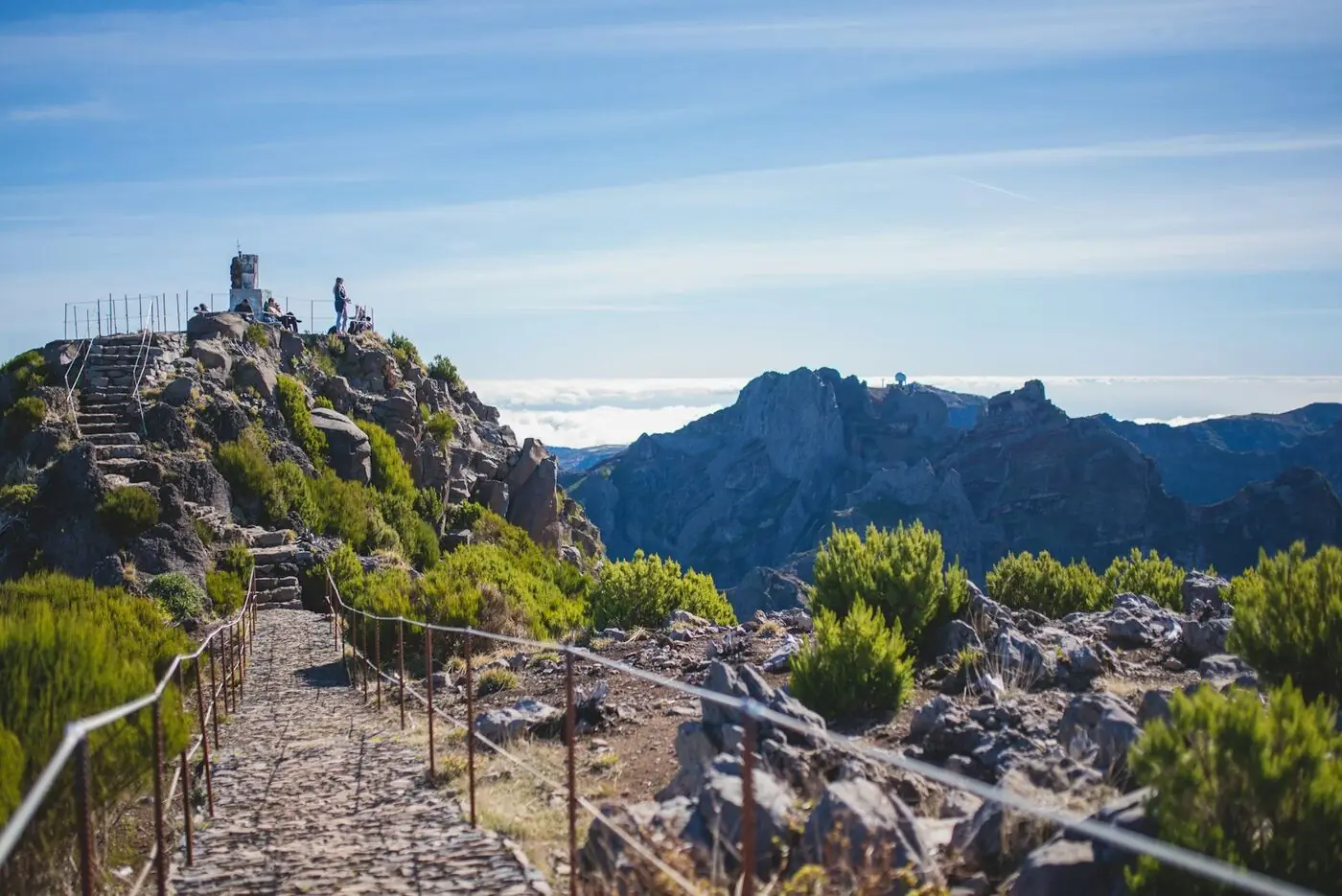
The mountain hiking season in Madeira is narrower than most visitors think. Winter (Dec-Feb) sees regular closures of PR1 for wind, ice or landslide repair — check ifcn.madeira.gov.pt the week you go. July and August often bring cloud caps on the peaks from lunchtime onwards and the trail is crowded from 8am.
The sweet spots are the shoulders: late April to mid-June (long daylight, cool mornings, cleared trails after winter maintenance) and mid-September to October (stable weather, warm sea for a post-hike swim, fewer people). If you want the classic 'above the clouds' PR1 sunrise photo, book a driver for a pre-dawn transfer — the alternative is walking back the same route, doubling the day.
If you want empty levadas and low prices: January to early March
January and February are the cheapest months to fly to Funchal (from most of Europe) and the quietest on the trails. The famous Levada do Caldeirão Verde and 25 Fontes routes are practically deserted mid-week. Coastal walks are comfortable in a fleece, the laurisilva forest is at its greenest, and Funchal's restaurants have space for walk-ins.
The trade-offs are real: 3-5 rainy days per week on average (mostly on the north coast — the south stays drier), some higher-altitude trails closed, sea too cold to swim without a wetsuit, and shorter days (sunrise around 8am, sunset by 6pm). If you're the kind of traveller who prefers a walking holiday to a beach one, this is arguably the best season on the island.
If you're coming for whales, dolphins, and marine life: April to October
Cetacean sightings are possible year-round but the reliable window is April to October, with peak activity in June-September. Common species: short-finned pilot whales (resident), bottlenose and Atlantic spotted dolphins, occasional sperm whales and Bryde's whales in late summer.
Book the boat operator that respects the 300 m approach rule — the ones that chase animals get results the same day but disturb populations. A morning departure is calmer than afternoon; the sea picks up after 2pm from July onwards.
If you want the beach + swim experience: July to October
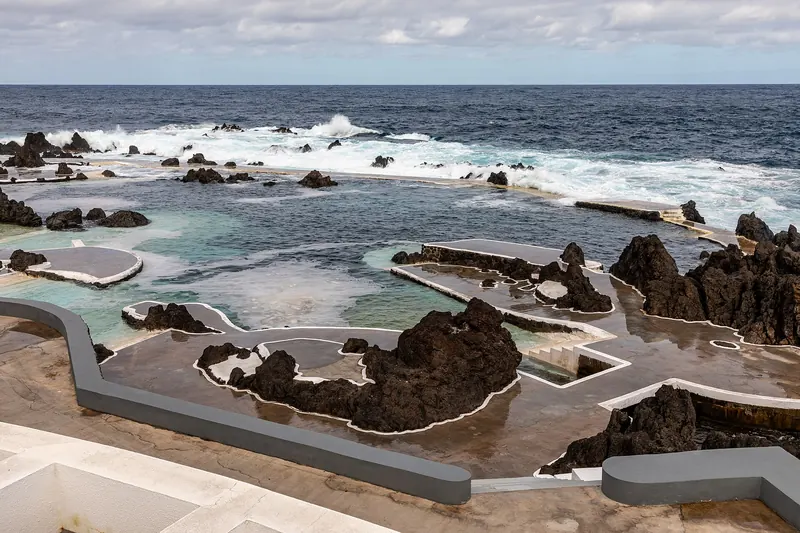
Madeira is not a beach island in the Caribbean sense — expect natural pools, imported-sand beaches (Calheta, Machico), volcanic black-sand coves (Seixal, Praia Formosa) and Porto Moniz's lava pools. Sea temperature hits 22-23 °C from mid-July through October, which is when swimming feels genuinely pleasant.
August is by far the busiest month (mainland Portuguese holidays), so Funchal accommodation books out 4-6 months ahead and prices spike 30-50%. September gives you the same water temperature at 25% lower cost and half the crowds. October is a well-kept secret — warm sea, empty beaches, low prices.
If you're cruising and only have one port day: May-October beats winter
Cruise ships call in Funchal all year, but the cruise-day experience is better in the warmer months. Winter ships face more schedule changes from Atlantic swell; summer ports are almost always on time. Sunrise on Pico do Areeiro (a common 6-hour excursion) is spectacular from May to October but often obscured by cloud in winter.
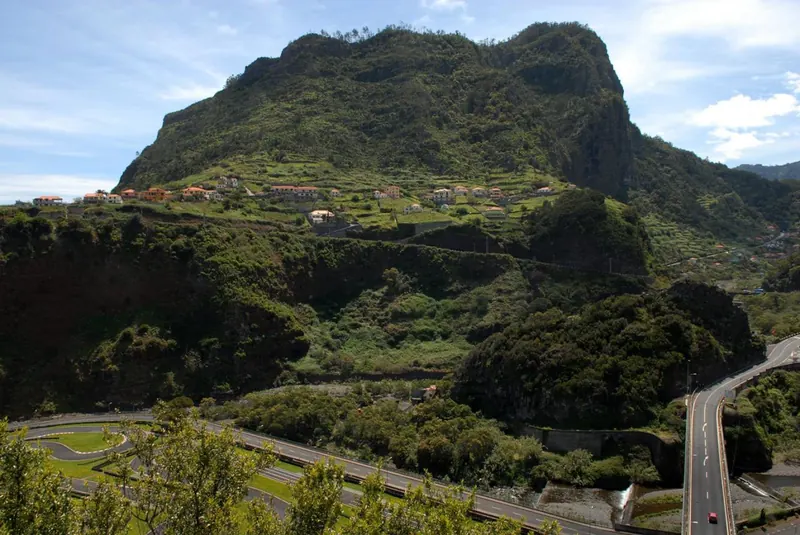
If your cruise itinerary is fixed, that's fine — Madeira still delivers a great port day in February. Just skip the high-altitude excursions and stick to coastal + Funchal + Cabo Girão + Câmara de Lobos, which are reliably clear.
If you love food festivals & culture: February (Carnival), April (Flower Festival), September (Wine Festival), December (Christmas lights & Madeira NYE fireworks)
- February — Carnival, brass bands and parades in Funchal, warm-up rehearsals fill the old town for a week beforehand
- April — Flower Festival, streets covered in floral tapestries, the parade is one of the most photographed events in Portugal
- May-June — Atlantic Festival, weekly fireworks over the bay every Saturday
- September — Madeira Wine Festival in Estreito de Câmara de Lobos, working demonstrations at the vineyards
- December-January — Christmas illuminations start December 1, NYE fireworks are officially the largest in the world (Guinness-record 2006, still spectacular)
Months to think twice about (and why)
August — pricing peaks, mainland Portuguese school holidays, mountain trails crowded from 7am, Funchal restaurants take walk-ins only in the last 30 minutes before closing.
December 26 to January 5 — NYE fireworks bring the island's biggest crowd of the year; hotel prices triple, road access to Funchal is restricted from December 30 to January 1. Wonderful if you're coming for the fireworks, painful if you're not.
March — the wettest month statistically, though rain falls in bursts rather than all day. Also the coldest sea temperature. If you're flexible, pick April instead.
How to hedge your bets: pick shoulder season and stay 7+ nights
The single best advice: come in May, early June, mid-September or October, and stay a full week. Long enough to wait out a bad-weather day (the microclimates mean somewhere on the island is always sunny), short enough to avoid running out of energy on the seventh consecutive levada.
If you can only stay 3-4 nights, come in the peak of your priority season — June for hiking, September for beach, February for empty levadas — rather than gambling on shoulder weather with less time to adjust plans.
Frequently asked questions
Is Madeira good to visit in winter?+
Yes, if you're coming for walking, food and empty levadas — no, if you want to swim in the sea or hike the high peaks (which close often in Dec-Feb). Coastal temperatures stay 16-19 °C, so a light jacket is enough during the day.
What's the rainy season in Madeira?+
November to March, with March statistically the wettest. But rain is concentrated on the north coast — the south (Funchal, Ponta do Sol, Câmara de Lobos) stays drier and often has sun even on 'rainy' days. A good local driver will re-route you to the sunny side.
When can you swim in the sea in Madeira?+
Comfortably from mid-June to end of October, with peak sea temperatures (22-23 °C) in September-October. Locals swim year-round, but visitors usually find November-May too cold without a wetsuit.
When is Madeira cheapest to visit?+
January, February and early March. Flights from the UK and mainland Europe drop 40-60% versus summer, and Funchal hotels have shoulder-season pricing. Trade-off is shorter days and less beach weather.
Should I avoid Madeira in August?+
Only if you dislike crowds and premium prices. The weather in August is excellent, but it's the busiest month (Portuguese domestic tourism plus European holidays), and hiking trails are packed from 7am. September delivers the same weather with 30% fewer people.
The 'best' time to visit Madeira depends entirely on the trip you want. Match the season to your priority — hiking, whales, empty trails, beach, or festivals — and you'll have the trip other visitors think they were unlucky to miss. If you'd like a private tour built around what's actually in season on your dates (whales in June, wine festival in September, empty levadas in February), see our private Madeira tours or contact us to plan the itinerary that fits your week.